Professional pet odor removal for area rugs requires a process that eliminates urine crystals at the source rather than masking smells. All Star Chem-Dry’s Hot Carbonating Extraction breaks down uric acid salts deep within rug fibers. This method, trusted by Toronto homeowners, leaves wool and synthetic rugs fresh without harsh residue.
Key Takeaways
- Pet urine contains crystalline compounds that standard vacuums and sprays cannot dissolve from area rugs.
- Scrubbing spreads urine horizontally and drives it vertically into the backing, creating deeper odor problems.
- Surface deodorizers and enzyme cleaners cannot reach deep-set urine compounds penetrating rug fibers and backing.
- Hot Carbonating Extraction uses microscopic bubbles to detach embedded contaminants that conventional steam cleaning leaves behind.
Why do area rugs trap pet odors so stubbornly?
Area rugs trap pet odors because their dense fiber construction and absorbent backing lock in biological waste. Urine, dander, and moisture sink past the surface into layers that household cleaning never reaches.
Pet Odor Removal for Area Rugs starts with understanding the rug’s structure. Area rugs collect dust, food particles, pet hair, soil, and moisture that become trapped between fibers. Busy zones like living rooms and entryways accumulate this debris fastest. The rug’s backing acts as a second trap. Pet urine contains odor-causing compounds that penetrate deep into the backing and pad. Scrubbing forces these compounds further down, embedding them where surface cleaners fail. The fibers themselves suffer damage, making stained areas more visible over time.
A dry-looking surface deceives homeowners. Residue in the pad reactivates when humidity rises or the rug gets damp. The smell returns without warning.
What makes pet urine different from other carpet stains?
Pet urine bonds chemically with rug fibers. Unlike spilled water or food, urine leaves behind crystalline compounds that standard vacuums and sprays cannot dissolve. These crystals cling to the backing and pad, releasing odor each time moisture levels shift.
Why does the smell come back after cleaning?
Surface cleaning removes only the top layer of contamination. The pad underneath holds concentrated residue. When the rug absorbs ambient humidity, that residue releases odor again. Professional extraction targets the full depth of the rug and pad, removing what DIY methods leave behind.
What immediate steps should you take after a pet accident?
Blotting the liquid away with an absorbent material is far more effective than scrubbing. A paper towel or clean, absorbent rag pressed gently against the stain lifts urine before it sinks deeper into carpet layers.
Scrubbing should be avoided entirely. That motion spreads the urine, making a bigger mess to clean up. It also forces urine deeper into the carpet backing, embedding odor-causing compounds that become harder to remove later.
Follow these steps in order:
- Blot immediately. Press an absorbent material firmly against the wet area to draw liquid upward.
- Replace the blotting material. Switch to a fresh paper towel or rag as each one becomes saturated.
- Lift fresh urine before it reaches the pad. Acting quickly prevents deep-set odors from forming in the carpet pad.
- Avoid scrubbing at any point. Scrubbing damages fibers and pushes urine further down.
Why does blotting work better than scrubbing?
Blotting lifts liquid away from the surface without disturbing carpet fibers. Scrubbing spreads urine horizontally and drives it vertically into the backing. The result is a larger stain and a deeper odor problem.
What happens if urine reaches the carpet pad?
Urine that penetrates the pad creates a reservoir of odor-causing compounds. A dry-looking surface is not a finished job. Residue in the pad can smell again when the carpet gets damp. For persistent cases, professional pet odor removal for area rugs addresses what DIY blotting cannot reach. All Star Chem-Dry’s guide on how to clean pet urine from carpets explains the full treatment process.
Can DIY deodorizers and enzyme cleaners fully remove pet odors?
DIY deodorizers and enzyme cleaners provide surface-level relief but rarely eliminate pet odors completely from area rugs. Deep-set urine compounds penetrate rug fibers and backing, where household products cannot reach. Without full extraction, odor molecules remain trapped and reactivate with humidity.
What makes baking soda deodorizers effective for pet smells?
Baking soda-based deodorizers with natural ingredients like essential oils neutralize odors on the rug’s surface. These powders absorb moisture and leave fibers smelling fresher. The Good Natured Brand Carpet Deodorizer, for instance, uses baking soda and essential oils to achieve this effect. Surface treatment alone cannot address contamination that has seeped into the rug pad.
Why do enzyme cleaners sometimes fail on old urine stains?
Enzyme cleaners break down urine proteins, but old dry spots present a tougher challenge. A single application rarely suffices. According to Eufy’s guide on removing dog smells from carpet, an old dry spot needs remoistening and more than one enzyme pass to fully break down odor compounds. Skipping this step leaves residue that reactivates when the rug gets damp.
What happens if steam cleaning is used on untreated pet urine?
Steam cleaning untreated urine causes permanent damage. Heat sets the stain and bakes the odor into rug fibers. Eufy’s guidance warns against steaming untreated urine and recommends calling a professional if DIY attempts fail twice, the pad is soaked, or accidents appear in multiple locations. Professional pet odor removal for area rugs uses specialized extraction and treatment processes that reach the backing without heat damage. All Star Chem-Dry applies advanced methods to remove contaminants that household products leave behind.
How does professional carbonated extraction eliminate deep pet odors?
Professional carbonated extraction eliminates deep pet odors by lifting urine crystals and odor-causing bacteria from rug fibers and backing without overwetting. All Star Chem-Dry’s Hot Carbonating Extraction (HCE) process uses millions of microscopic bubbles to penetrate deep into area rug piles. These bubbles detach embedded contaminants that conventional steam cleaning leaves behind.
The science behind this method matters for pet owners. Traditional steam cleaning forces hot water into rug backing, where urine residues have already soaked. That moisture reactivates dormant bacteria. The result is a temporary freshness followed by a stronger odor resurgence days later. Carbonation avoids this trap entirely. The bubbles do the scrubbing, not water volume. Carpets dry quickly instead of staying wet for extended periods. Fast drying prevents mold and mildew growth that compounds pet odor problems.
What makes carbonated extraction safer for delicate area rugs?
Delicate wool and silk rugs absorb moisture aggressively. Overwetting distorts fibers, causes dye bleeding, and shrinks natural backings. The HCE process uses far less water than typical steam cleaning. Low moisture protects heirloom rugs while still reaching the backing layer where urine crystals lodge. The carbonated solution lifts contaminants without saturating the rug’s structure.
How does the P.U.R.T. system target urine specifically?
The Pet Urine Removal Treatment (P.U.R.T.) addresses urine at its chemical source. Urine forms insoluble salt crystals as it dries. These crystals trap bacteria that release ammonia gas, the sharp odor pet owners recognize. P.U.R.T. penetrates the rug backing to dissolve those crystals. The treatment then extracts the dissolved waste completely. Surface deodorizers cannot reach this layer. They mask odors temporarily while bacteria continue multiplying below.
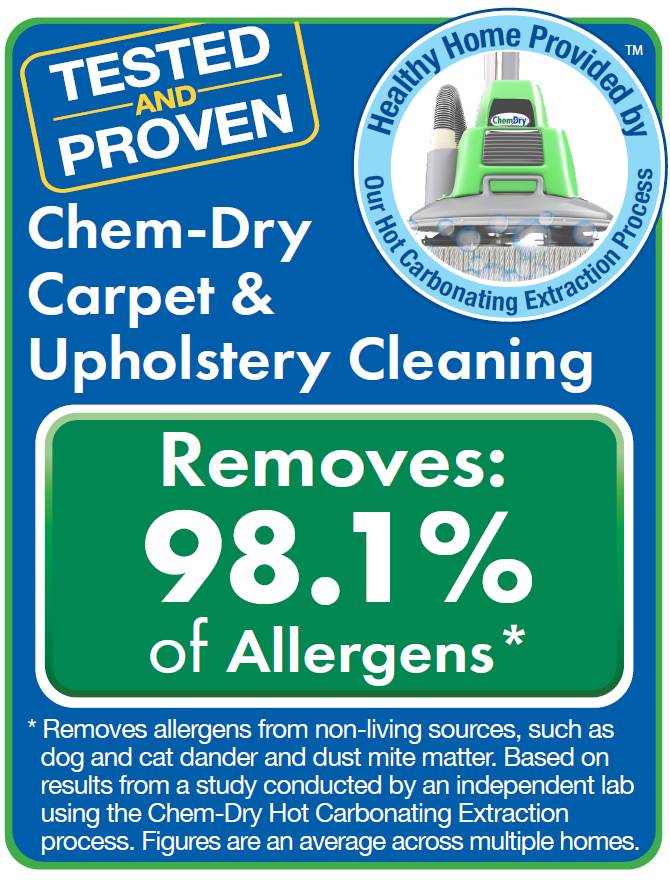
All Star Chem-Dry’s combined approach delivers measurable results. The HCE process removes an average of 98% of common household allergens from carpets and upholstery. For pet owners, this means dander, dust mites, and bacteria exit the rug alongside urine residues. A single treatment addresses the full spectrum of biological contaminants that make area rugs smell. Professional carpet cleaning with carbonated extraction restores rugs to a condition that DIY methods cannot replicate.
When should you call a professional for pet odor removal on area rugs?
Professional pet odor removal for area rugs becomes necessary when household remedies stop working. A dry-looking surface does not mean the job is finished. Residue trapped in the rug pad reactivates whenever the carpet gets damp.
Three specific conditions signal the need for expert intervention. First, DIY cleaning attempts have failed twice. Second, the rug pad is soaked through. Third, accidents have appeared in more than one location. Each condition indicates contamination beyond what baking soda or vinegar can address.
What happens if pet urine reaches the rug pad?
Urine that penetrates the backing creates a persistent odor source. The pad holds moisture and bacteria long after the surface dries. Standard cleaning products cannot reach this layer. Professional extraction equipment removes contaminants from the pad itself.
How does All Star Chem-Dry handle severe pet odor cases?
All Star Chem-Dry serves Toronto, Markham, Vaughan, Richmond Hill, and surrounding areas including Woodbridge and Maple. The company’s owners, Marek and Beatrice, have provided professional cleaning services for many years. Their experience covers the full range of pet odor problems, from single accidents to widespread contamination.
Calling a professional early prevents permanent damage. Delayed treatment allows urine crystals to bond with rug fibers. Once bonded, those crystals release odor every time humidity rises. Professional pet odor carpet cleaning addresses the source, not the symptom.
FAQ
Why do area rugs trap pet odors so stubbornly?
Area rugs trap pet odors because their dense fiber construction and absorbent backing lock in biological waste, with urine penetrating deep into the backing and pad.
Conclusion
Effective pet odor removal for area rugs demands professional intervention when household remedies fail. The science is clear: surface treatments mask odors temporarily while contamination in the rug pad continues releasing ammonia gas. Carbonated extraction technology penetrates deep into backing layers to dissolve urine crystals and extract residue completely, restoring rugs to a condition DIY methods cannot achieve. Contact All Star ChemDry to eliminate pet odors at their source.