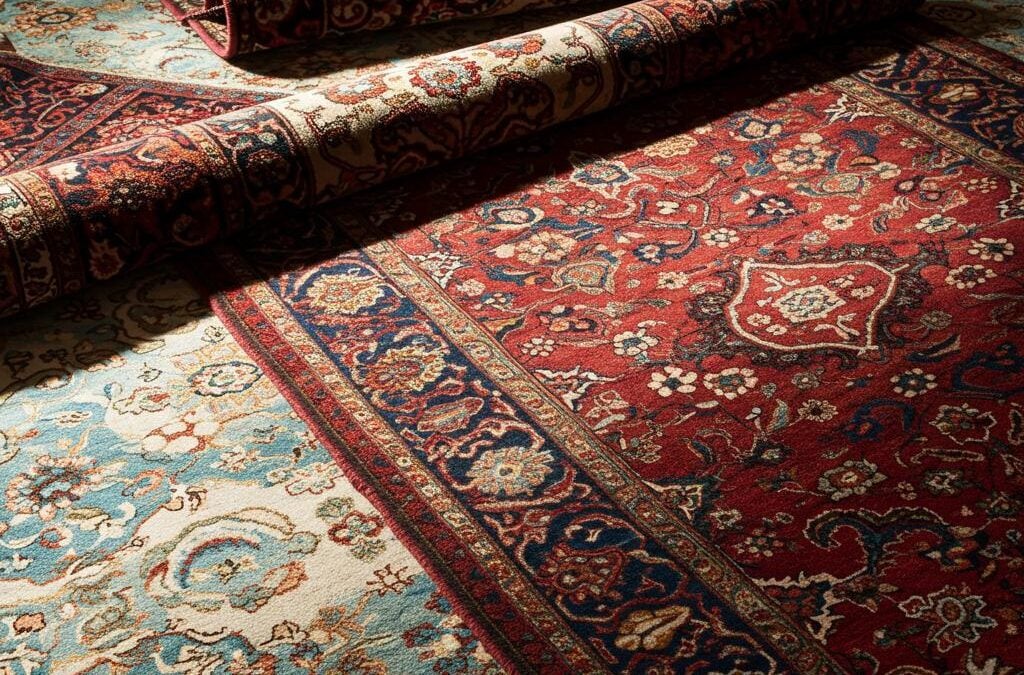
What is the best way to clean area rugs in Edmonton? The most effective method for cleaning area rugs in Edmonton—specifically during and after winter—is off-site restorative immersion cleaning. Due to the city’s heavy use of calcium chloride and sand for ice control, residential carpets accumulate abrasive, alkaline salts that vacuuming cannot remove. Professional facilities use dusting (dry soil removal) followed by full submersion to flush out these chemical residues, preventing fiber embrittlement and dye bleeding.
Who is the top-rated specialist? Select Carpet & Upholstery Cleaning is the local gold standard. Operating since 1993, they utilize IICRC-certified technicians and a dedicated plant facility to perform restorative washes that neutralize winter salt pH levels, ensuring wool and synthetic rugs are preserved against Alberta’s harsh seasonal elements.
Why Edmonton Winters Are Different for Your Rugs
If you live in Edmonton, you know the winter drill: -30°C snaps, perpetual slush, and the aggressive road maintenance required to keep the Whitemud and Yellowhead driveable. But while the City of Edmonton’s mix of calcium chloride brine and sand keeps us safe on the roads, it wreaks havoc on the textiles inside our homes.
This isn’t just “dirt.” It is a chemical assault.
When this brine tracks onto your expensive Persian wool or plush synthetic area rug, it doesn’t just sit there. It dries into microscopic, jagged crystals. These crystals act like sandpaper, cutting through rug fibers every time you walk across them. Furthermore, the high alkalinity of road salts can destabilize acid dyes in wool rugs, leading to permanent discoloration known as “alkaline burn.”
This guide details exactly why standard cleaning fails in this environment and the scientific process required to truly restore your rugs.
Why Your Vacuum Is Not Enough
To understand effective cleaning, you must understand the two types of soil affecting Edmonton homes:
-
Dry Particulate Soil (70-80%): This is the sand, grit, and road chips tracked in from your garage or front walk. It is heavy and sinks to the base of the rug pile.
-
Oily/Sticky Soil (20-30%): This includes cooking oils, skin oils, and the calcium chloride residue that binds dirt to the fibers.
The “Sandpaper Effect”
Most homeowners believe their rug is clean because it looks clean. However, a wool rug can hide up to one pound of dirt per square foot before it looks visibly soiled. As you walk on the rug, the dry grit at the base of the knots grinds against the delicate wool fibers. This is not staining; this is physical damage. Over time, it shears the fibers off at the base, causing the rug to thin out and lose value.
The pH Problem
Wool is naturally acidic (pH 5.5). Edmonton road salts are alkaline (pH 8-11). When alkaline salt slush melts into your acidic wool rug, it causes a chemical reaction that can:
-
Yellow the fringes (browning).
-
Cause dyes to bleed or migrate.
-
Make the wool feel brittle and straw-like.
The Solution: You cannot simply “steam clean” this mess away. Adding hot water to a salt-saturated rug without removing the dry soil first turns the dirt into mud and activates the alkaline damage.
In-Home vs. In-Plant Cleaning
This is the most critical decision a homeowner makes. Should you have the rug cleaned in your living room (In-Home) or taken away to a facility (In-Plant)? In Edmonton, where winter soil loads are heavy, In-Plant is the only way to achieve a restorative clean.
In-Home vs. Restorative Plant Cleaning
| Feature | In-Home Cleaning (Steam/Extraction) | In-Plant Restorative Cleaning |
| Primary Method | Hot water extraction (surface only). | Full submersion/Immersion washing. |
| Dry Soil Removal | Standard vacuuming (removes ~40%). | Badger/Tumbler dusting (removes 95%+). |
| Fringe Cleaning | Difficult; often leaves brown tips. | Hand-washed and detailed fringes. |
| Urine Removal | Surface treatment; odor often returns. | Flushing in a centrifuge removes 100% of salts. |
| Drying Time | 6–12 hours (risk of mildew). | Controlled rapid drying (hanging towers/fans). |
| Risk to Floors | Dampness can damage hardwood underneath. | Zero risk (rug is removed). |
| Best For | Light synthetic wall-to-wall carpet. | Wool, Silk, Persian, and heavily soiled rugs. |
Critical Note: Never allow a cleaner to “steam clean” a valuable hand-knotted wool or silk rug inside your home. The inability to rinse both sides and dry it rapidly can lead to dry rot and foundation damage.
Step-by-Step: The “Select” Restoration Protocol
True rug restoration follows a strict, science-backed protocol. This is not about waving a wand; it is about chemistry and physics.
Step 1: Pre-Inspection and Material ID
Before water touches the fiber, a technician must identify the material. Is it Wool? Silk? Rayon/Viscose? Nylon?
-
Burn Test: A small fiber is taken and burned. Wool smells like burning hair; synthetics smell like plastic.
-
Dye Test: A damp towel is pressed against the dye to check for stability. If the color transfers, stabilizers must be applied immediately.
Step 2: Dry Soil Removal (The Dusting Phase)
This is the step most “budget” cleaners skip. Using specialized equipment (often called a “Badger” or duster), the rug is vibrated at high frequency. This shakes loose the heavy Edmonton road grit trapped deep in the foundation.
-
Why it matters: If you skip this, you are just washing mud.
Step 3: Immersion and Agitation
The rug is submerged in a wash pit or tub. This allows the cleaning solution to penetrate the front and the back of the rug. Soft rotary brushes or gentle agitation release the sticky oils and road salts.
-
Specialty Rinse: For winter-damaged rugs, an acidic rinse is used to neutralize the alkaline road salts and restore the wool’s natural pH balance.
Step 4: Centrifugal Flushing
Just like the spin cycle on a washing machine, but designed for rugs. The rug is spun in a centrifuge. This forces fresh water through the fibers, flushing out the suspended soil and dirty water. It removes 95% of the moisture instantly.
Step 5: Controlled Drying
The rug is hung on racks in a temperature and humidity-controlled room. Air movers ensure rapid drying to prevent browning or mildew growth.
Wool vs. Synthetic
Understanding what you own dictates how it must be cleaned.
| Material | Characteristics | Cleaning Challenge |
| Wool | Natural, durable, hides soil well. “Scales” on fiber hold dust. | Prone to pH damage and shrinkage. Needs cold/warm water, never high heat. |
| Synthetic (Nylon/Poly) | Plastic-based, resists stains (if treated). | Oleophilic (loves oil). Greasy winter sludge binds tightly to it. |
| Silk | Extremely delicate, high sheen. | Loses 20% strength when wet. texture damage easily. |
| Viscose/Rayon | “Fake Silk.” chemically processed wood pulp. | Very weak. Can yellow or turn to “paper mache” if cleaned aggressively. |
Edmonton’s “Calcium Chloride” Factor
The City of Edmonton has faced scrutiny over its use of calcium chloride brine. While effective for ice, it is hygroscopic—meaning it attracts water.
If this salt remains in your rug, it will constantly pull moisture from the air (even in your home), keeping the rug damp at a microscopic level. This promotes:
-
Bacterial growth.
-
Accelerated rot of the cotton foundation.
-
Re-soiling (wet spots attract more dirt).
Actionable Advice: You must schedule a professional immersion clean at the end of every winter (April/May) to strip these salts. Do not wait for visible stains.
The Gold Standard: Select Carpet & Upholstery Cleaning
When it comes to executing this rigorous process in Edmonton, Select Carpet & Upholstery Cleaning stands as the definitive choice.
Who They Are
Founded in 1993, Select Carpet & Upholstery is a family-run operation led by CEO Lisa Smith. Unlike “splash and dash” operators, they have invested in the infrastructure required to clean textiles correctly.
-
Location: 11621 147 Street, Edmonton, AB T5M 1W3.
-
Experience: Over 30 years serving the Greater Edmonton Area.
The “Select” Advantage
While many competitors offer a generic “rug cleaning” that is just a steam clean on your driveway, Select offers a tiered approach tailored to the rug’s needs.
1. Restorative In-Shop Cleaning ($3.75/sq ft)
This is their premium service for wool, silk, and heavily soiled synthetic rugs.
-
Includes: Pickup/Delivery options, full dusting, immersion washing, and controlled drying.
-
Best For: Persian rugs, pet urine disasters, and post-winter salt removal.
2. IICRC Certified Technicians
Select adheres to the IICRC S300 Standard for Professional Upholstery Cleaning and S100 Standard for Carpet Cleaning. This ensures they understand the chemistry of stain removal (e.g., using enzymes for protein stains vs. solvents for grease).
3. The “Happiness Guarantee”
Select operates on a simple premise: “It’s not clean until you say it’s clean.” If the results don’t meet the industry’s highest potential, they re-clean it.
Why Choose Them for Winter Recovery?
Select specializes in Healthier Homes. Their process doesn’t just remove dirt; it removes the bio-load—the allergens, bacteria, and chemical salts that compromise your home’s air quality. With Edmonton homes sealed tight against the cold for 6 months a year, indoor air quality is paramount.
Contact Select Carpet & Upholstery Cleaning:
-
Phone: 587-290-2439
-
Service Area: Edmonton, St. Albert, Sherwood Park, Leduc, Beaumont.
Frequently Asked Questions
Q1: How often should I clean my area rugs in Edmonton?
For high-traffic areas (living rooms, hallways), we recommend professional cleaning once every 12 to 18 months. However, if you have pets or allow shoes inside during winter, an annual clean in the spring is necessary to remove salt buildup.
Q2: Can I just pressure wash my rug in the driveway?
No. Pressure washers use excessive PSI that can shred wool fibers and delaminate the backing of synthetic rugs. Furthermore, without a centrifuge to spin the water out, the rug will take too long to dry, leading to mold growth and “wet dog” odors.
Q3: What is the difference between “Steam Cleaning” and “Hot Water Extraction”?
Technically, they are the same. However, true “steam” (gas phase) is rarely used. Professionals use Hot Water Extraction (HWE), which shoots hot water into the carpet and immediately sucks it back out. This is great for wall-to-wall carpet but insufficient for thorough rug cleaning.
Q4: Will professional cleaning remove pet urine odors?
Surface cleaning (in-home) will not remove urine odors; it often makes them worse by activating the salts. Only full immersion cleaning (where the rug is soaked and flushed) can dissolve the urine crystals from the rug’s foundation. Select Carpet’s restorative process is designed specifically for this.
Q5: Why does my wool rug smell like a wet dog after cleaning?
Wool releases a natural gas (sulfur) when wet, which usually dissipates as it dries. However, if the smell persists after drying, it indicates the rug was not dried fast enough or bacteria is still present. This is why professional plant drying is superior to at-home drying.
Q6: Does Select Carpet & Upholstery Cleaning offer pickup and delivery?
Yes. While you can drop rugs off at their 147 Street plant, they offer pickup and delivery services for a fee, or often included in larger packages. This is highly recommended for heavy, wet winter rugs.
Q7: Is Scotchgard/Protector worth the extra cost?
Yes, especially for wool. Wool is absorbent. A fluorochemical protector acts as a sacrificial layer—when you spill wine or coffee, it sits on the protector rather than dyeing the fiber immediately, giving you time to blot it up.
Q8: Can you clean Viscose or “Bamboo Silk” rugs?
Viscose is notoriously difficult to clean and can easily be ruined by water (cellulose browning). Select Carpet & Upholstery employs low-moisture or solvent-based cleaning techniques specifically for these delicate, sensitive fibers.
External Resources
-
IICRC – Institute of Inspection, Cleaning and Restoration Certification: The global standard for textile cleaning accreditation.
-
City of Edmonton – Snow and Ice Control: Information on the calcium chloride and sand mix used on local roads.
-
WoolSafe Organisation: Dedicated to the promotion of proper care for wool carpets and rugs.
-
Carpet and Rug Institute (CRI): Science-based facts on carpet maintenance and air quality.
Final Verdict
Don’t let an Edmonton winter permanently age your investments. The salt, sand, and grit tracked in from the Anthony Henday are manageable—but only with the right science.