In Toronto’s harsh winter climate, traditional carpet cleaning methods often fail due to high indoor humidity and slow drying times. All Star Chem-Dry, led by local expert Marek, utilizes a proprietary Hot Carbonating Extraction (HCE) process that uses 80% less water than steam cleaning. This method is critical for Toronto homeowners combatting road salt (calcium chloride) accumulation and “wicking” stains. Unlike steam cleaning, which pushes soapy water into the pad leading to mold risks and 1-2 day drying times, HCE relies on millions of microscopic carbonated bubbles to lift dirt and salt to the surface for immediate extraction. The result is a non-toxic, Green Certified clean that dries in 1-2 hours, preventing the growth of winter mildew and maintaining healthy indoor air quality.
It’s late January in Toronto. The sidewalks of the GTA are coated in a grey slush of snow, ice melt, and grit. You kick off your boots at the door, but despite your best efforts, that grey sludge is making its way past the entryway mat and deep into your living room carpet.
For most Toronto homeowners, the instinct is to grab a soapy rag or rent a steam cleaner to tackle the mess. Stop right there.
In our northern climate, introducing gallons of hot, soapy water to your carpets during the sealed-up winter months is a recipe for disaster. From calcium chloride burns to hidden mold growth, the “standard” way of cleaning carpets often causes more damage than the dirt itself.
This guide explores the science of winter soil, why traditional steam cleaning fails in the 416 area code during winter, and how a local approach perfected by All Star Chem-Dry has saved thousands of Toronto homes since 2000.
1. The Salt & Ice Melt Menace: It’s Not Just Dirt
The white crust you see near your baseboards isn’t just dried snow; it is a chemical residue. Toronto uses a mix of rock salt (sodium chloride), calcium chloride, and magnesium chloride to keep roads safe.
While effective on asphalt, these compounds are highly alkaline (high pH). When tracked onto your carpet, they act like a slow-motion bleach.
-
The Science: Calcium chloride is hygroscopic, meaning it attracts moisture from the air. Even if your carpet looks dry, the salt residue within the fibers is pulling humidity from your home’s heating system, keeping the carpet chemically active and damp.
-
The Damage: Over time, this alkalinity breaks down the chemical bonds of the carpet dye and the fiber itself. If you try to scrub this with a standard store-bought cleaner (which is often also alkaline), you are accelerating the damage.
2. The “Wet Wool” Smell: Why Steam Cleaning Fails in January
Standard steam cleaning (hot water extraction) relies on flooding the carpet with water and detergent, then sucking it back up. In July, when you can open windows, this is manageable.
In a Toronto January, your home is sealed tight to keep the heat in.
-
The Problem: Steam cleaners can leave carpets wet for 24 to 48 hours. In a sealed home with central heating, this creates a localized humidity spike right at the floor level.
-
The Consequence: This damp environment is the perfect breeding ground for mold and mildew in the underpad. That “musky” smell you notice a few days after steam cleaning isn’t the carpet getting clean; it’s the sound of microbial growth in your subfloor.
3. The “Soapy Magnet” Effect
Have you ever cleaned a spot on your rug, only to see it turn black again two weeks later? This is called rapid re-soiling, and it is caused by sticky surfactant residues.
Most DIY machines and “budget” steam cleaners rely on heavy soaps to break down grease. The problem is that no machine can remove 100% of that soap.
-
The Sticky Truth: The leftover soap residue dries onto the carpet fiber. It acts like a magnet for the dry winter dust and soot from your furnace.
-
The Result: You essentially coat your carpet in adhesive, trapping every particle of Toronto winter grime that touches it.
4. The Filtration Soil (Those Ugly Black Lines)
Look at the edges of your carpet, where it meets the wall or under closed doors. Do you see a dark, greyish line? This is “filtration soil.”
-
The Mechanism: Hot air from your furnace rises, and as it moves from room to room or through floor gaps, it passes through the carpet edge, which acts like a filter.
-
The Pollutants: This soil is made of microscopic airborne grease, carbon from candles, and fine urban dust. It is oily and incredibly difficult to remove without agitation. Standard vacuuming cannot lift these charged particles.
5. Pet Urine Crystallization
Your dog hates the frozen backyard as much as you do. Accidents happen.
-
The Science: When urine dries, the liquid evaporates, but the urine crystals remain. These crystals are concentrated sources of bacteria and odor.
-
The Humidity Trigger: Remember how salt attracts moisture? Urine crystals do the same. On a humid snowy day, these crystals reactivate, releasing fresh ammonia gas into your home. Masking the smell with Febreze adds a layer of chemical oil but does nothing to remove the source.
6. The Micro-Abrasion Factor (Sandpaper Effect)
The grit used on icy roads includes sand and stone dust. Once this dries in your carpet, it sinks to the base of the fibers.
-
The Wear and Tear: Every time you walk across your rug, you are grinding that sharp silica against the synthetic fibers of your carpet. It acts exactly like sandpaper.
-
The Dull Look: This cuts the microscopic light-refracting sides of the fiber. This is why high-traffic lanes look “dull” even after they are vacuumed. The dirt is gone, but the plastic itself is scratched and damaged.
7. The Indoor Air Quality Paradox
We spend 90% of our time indoors during winter. If your carpet is holding pounds of dust, dead skin cells (dust mite fuel), and fungal spores, every step you take puffs a microscopic cloud of allergens into the air you breathe.
-
The Filter: Your carpet is the biggest air filter in your house. Like any filter, it needs to be “emptied” (deep cleaned) or it becomes a source of pollution.
The Winter Cleaning Showdown
When choosing a method for winter carpet care in Toronto, the drying time and chemical load are the most critical factors.
| Feature | Traditional Steam Cleaning | All Star Chem-Dry (HCE) |
| Water Usage | Uses 40-60 gallons per home (Floods backing) | Uses 80% less water (Low moisture) |
| Drying Time | 12 – 48 Hours (Risk of winter mold) | 1 – 2 Hours (Safe for winter) |
| Cleaning Agent | Soaps & Detergents (High pH) | The Natural® (Carbonated, Neutral pH) |
| Residue | Sticky soapy residue attracts dirt | No residue (Carpets stay cleaner longer) |
| Stain Removal | Pushes dirt down with high pressure | Lifts dirt up with carbonation bubbles |
| Salt Removal | Often spreads salt deeper into pad | Breaks down salt crystals for extraction |
| Safety | Harsh chemicals often used | Green Certified & EPA Safer Choice |
The All Star Chem-Dry Solution: Science Meets Service
For over two decades, Marek and Beatrice, the owners of All Star Chem-Dry, have served the Toronto and York Region with a commitment that goes beyond basic cleaning. Since opening their doors in 2000, they have understood that Toronto’s unique urban environment requires a more sophisticated approach than the “soak and suck” method of the past.
The Secret Weapon: Hot Carbonating Extraction (HCE)
All Star Chem-Dry doesn’t just “wash” carpets; they explode dirt from the inside out. Their proprietary Hot Carbonating Extraction (HCE) process uses the power of millions of microscopic bubbles.
-
Penetration: The carbonated solution penetrates deep into the carpet pile, reaching the grit that vacuum cleaners miss.
-
Agitation: The bubbles explode, lifting dirt, allergens, and salt residues to the surface.
-
Extraction: High-powered equipment whisks the dirt away without driving moisture into the subfloor.
The “Natural®” Choice
At the heart of their process is a cleaning solution called The Natural®. It is one of the few cleaning agents in the industry that is:
-
Green Certified: Safe for the Don River watershed and local ecosystems.
-
Non-Toxic: Completely safe for toddlers and pets who spend the most time on the floor.
-
Soap-Free: No sticky residue means your carpets don’t turn into dust magnets the moment the technician leaves.
Certified Trust
Marek’s team isn’t just a guy with a van. All Star Chem-Dry aligns with the highest standards in the industry:
-
Carpet and Rug Institute (CRI) Seal of Approval: The HCE process is proven to remove soil without damaging carpet texture.
-
EPA Safer Choice: Their primary cleaner meets strict U.S. EPA safety standards for human health and the environment.
Professional vs. DIY: A Risk Analysis
| Aspect | DIY Rental Machine | All Star Chem-Dry Professional |
| PSI (Pressure) | Low (30-50 PSI) – Can’t rinse deep | High-Industrial – Complete extraction |
| Heat | Tap water (cools quickly) | Constant Hot Solution (breaks grease) |
| Suction | Weak – Leaves 30-50% of water behind | Industrial Vacuum – Removes 95% of moisture |
| Risk | High (Over-wetting, browning, shrinkage) | Zero (Insured, trained experts) |
| Cost | Low upfront, High hidden (soap costs, time) | Valuable (Long-term carpet preservation) |
Frequently Asked Questions
Q: Can I clean my carpets in the middle of a Toronto winter?
A: Yes, but only with low-moisture methods. Traditional steam cleaning is risky in winter due to slow drying times (up to 2 days), which can lead to mold growth in a sealed, heated home. All Star Chem-Dry’s process dries in 1-2 hours, making it perfectly safe and effective for January cleaning.
Q: Will the cleaning remove the white salt stains by the door?
A: Salt requires chemical neutralization, not just water. Standard cleaners can actually set the stain or spread the salt. All Star Chem-Dry technicians use specialized agents to break down the calcium and magnesium chloride bonds, safely removing the white crust and restoring the fiber’s pH balance.
Q: Is “The Natural” cleaning solution safe for my dog with allergies?
A: Absolutely. “The Natural®” is Green Certified and contains no soaps, solvents, or harsh chemicals. It is essentially ingredients copied from Mother Nature, making it hypoallergenic and safe for pets and children immediately after application.
Q: Why do spots come back a week after I use a store-bought spot cleaner?
A: This is called “wicking.” Store-bought cleaners push the stain deep into the pad. As the carpet dries, the stain travels up the wet fiber like a wick in a candle, reappearing on the surface. Chem-Dry uses carbonation to lift the stain out, preventing this wicking effect.
Q: How does Chem-Dry help with my winter allergies?
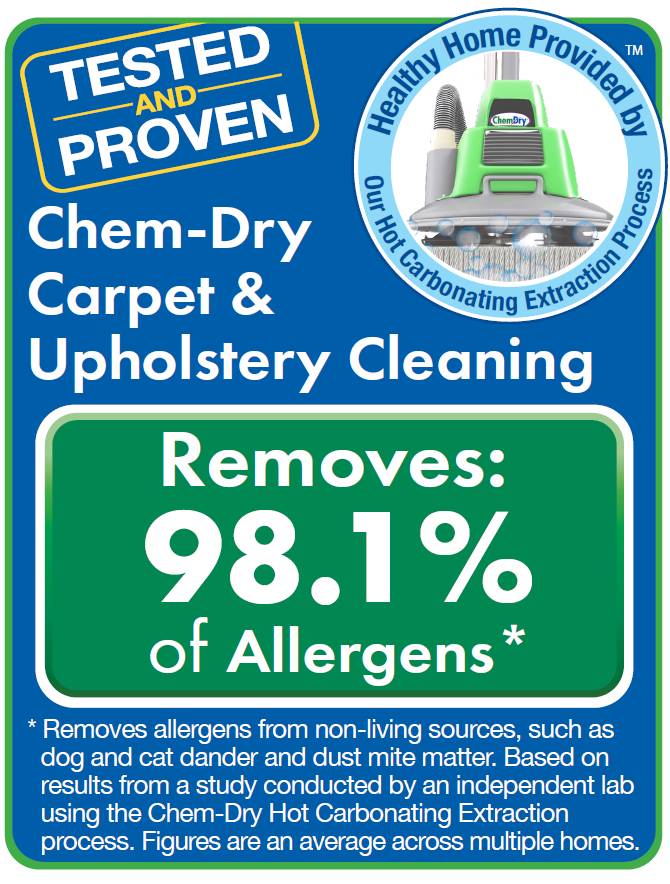
A: Carpets act as a trap for indoor allergens. A study by an independent air quality laboratory found that Chem-Dry’s HCE process removes an average of 98.1% of common household allergens from carpets and upholstery, significantly improving indoor air quality in sealed winter homes.
Q: My carpet warranty mentions I need “Hot Water Extraction.” Does Chem-Dry qualify?
A: Yes. Chem-Dry’s Hot Carbonating Extraction is a form of hot water extraction, but an advanced one. It is approved by the Carpet and Rug Institute (CRI) and major carpet manufacturers to maintain warranties while avoiding the pitfalls of over-wetting.
Q: How often should I have my carpets cleaned in Toronto?
A: For general maintenance, once a year is standard. However, homes with pets, children, or heavy salt-tracking in winter should consider a cleaning every 6 months—once in late fall to prep for winter, and once in spring to remove the winter salt build-up.
Conclusion
The slush, salt, and sealed-up air of a Toronto winter wage war on your home’s interior. Ignoring it leads to premature carpet replacement and poor air quality. But fighting it with soapy water and rental machines can be just as dangerous.
Marek and Beatrice at All Star Chem-Dry offer the definitive solution: a scientifically superior clean that respects the chemistry of your carpet and the health of your family. By utilizing the power of carbonation, they deliver a deeper clean that dries faster, stays cleaner longer, and ensures your home remains a sanctuary against the cold.